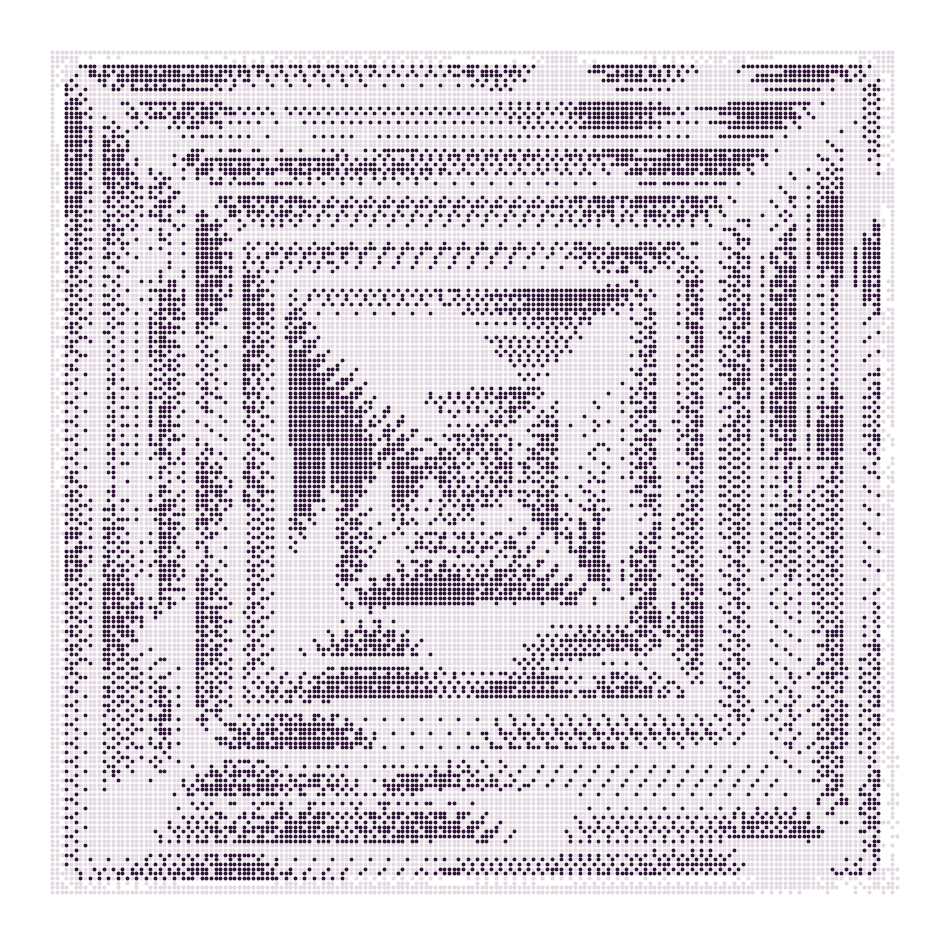
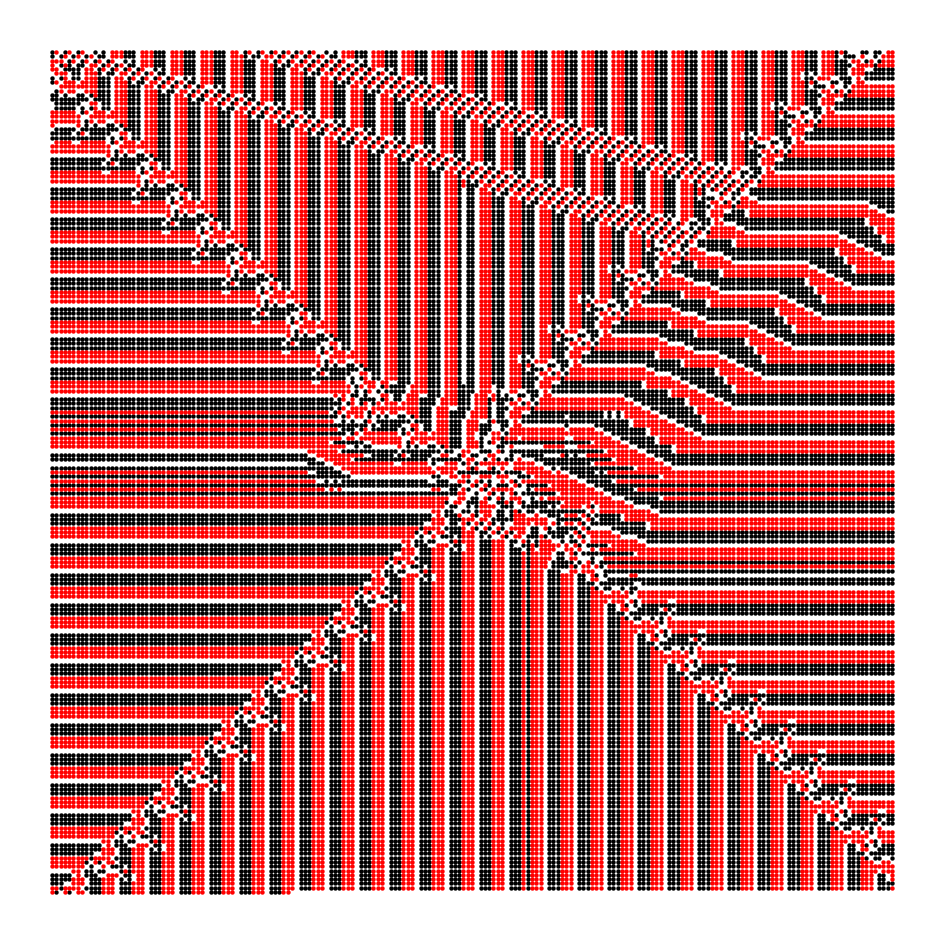
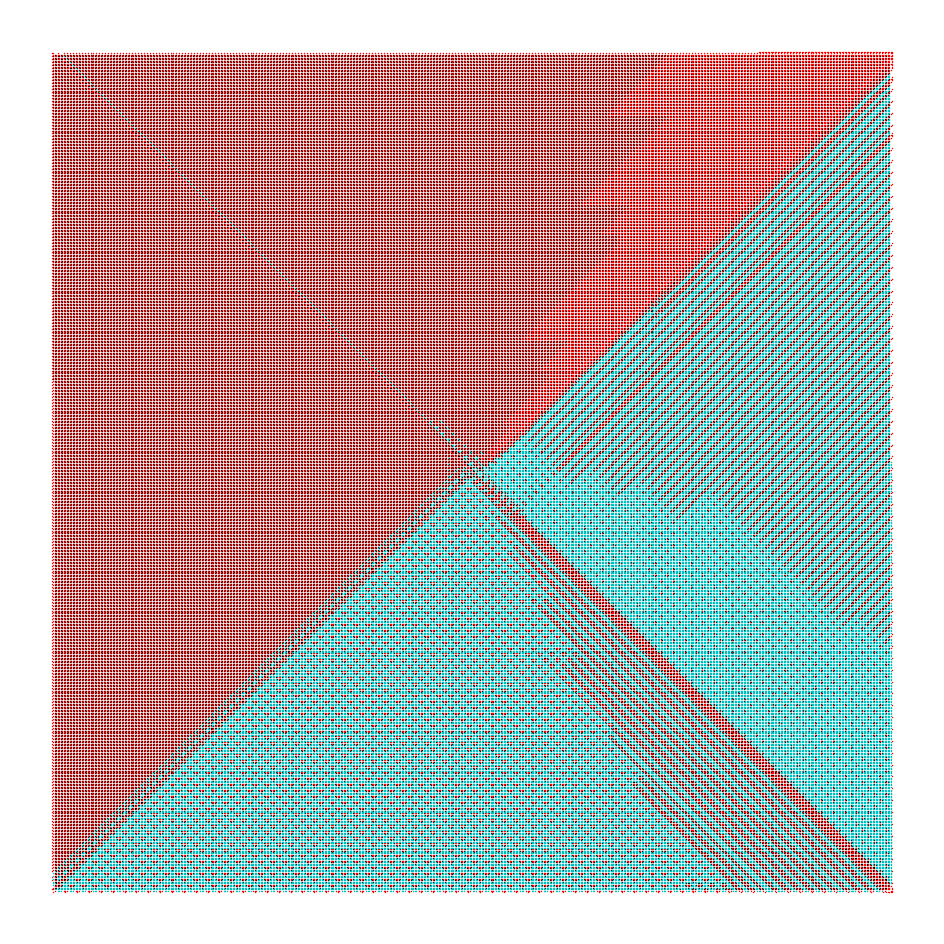
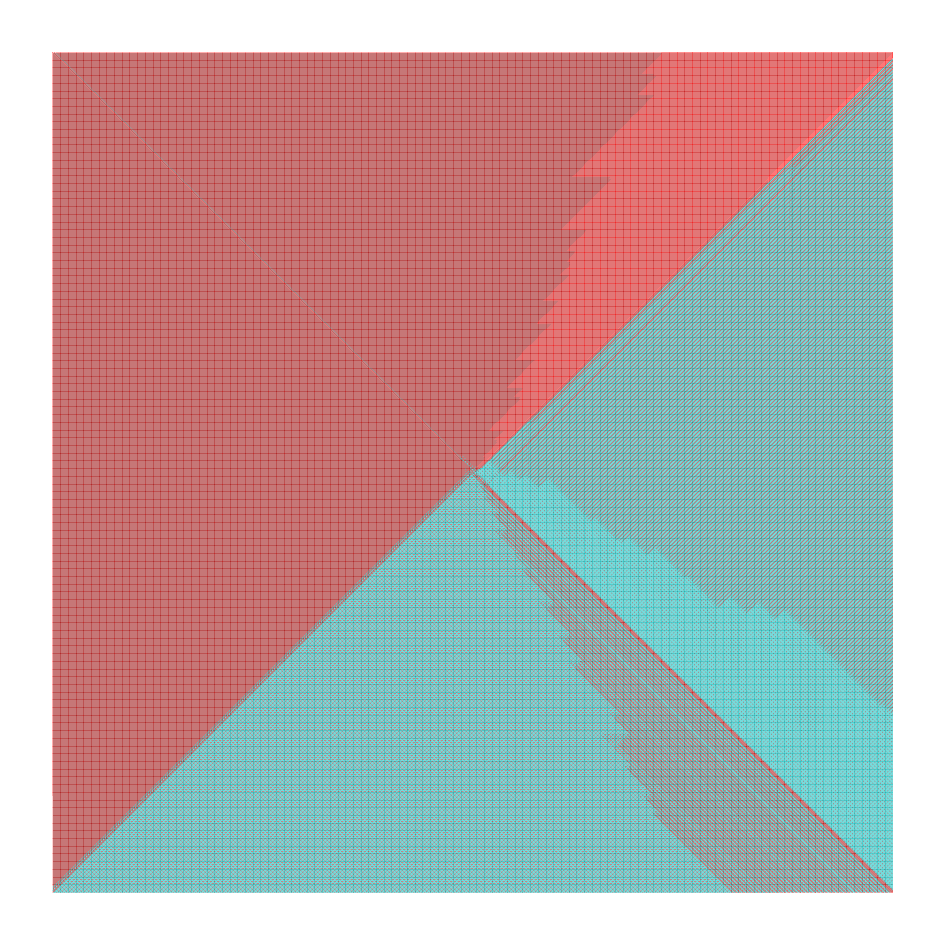
Black aspbad, orange spehbed. They are not out of focus; the blur is caused by how the colors mix.
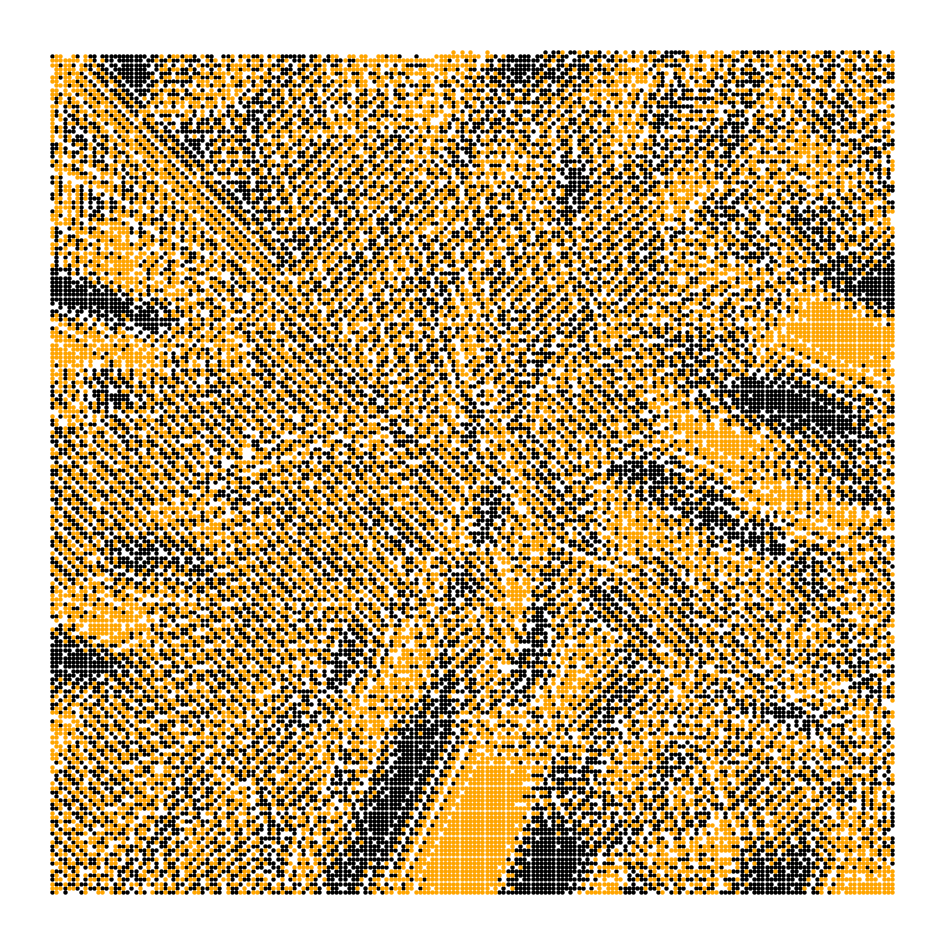
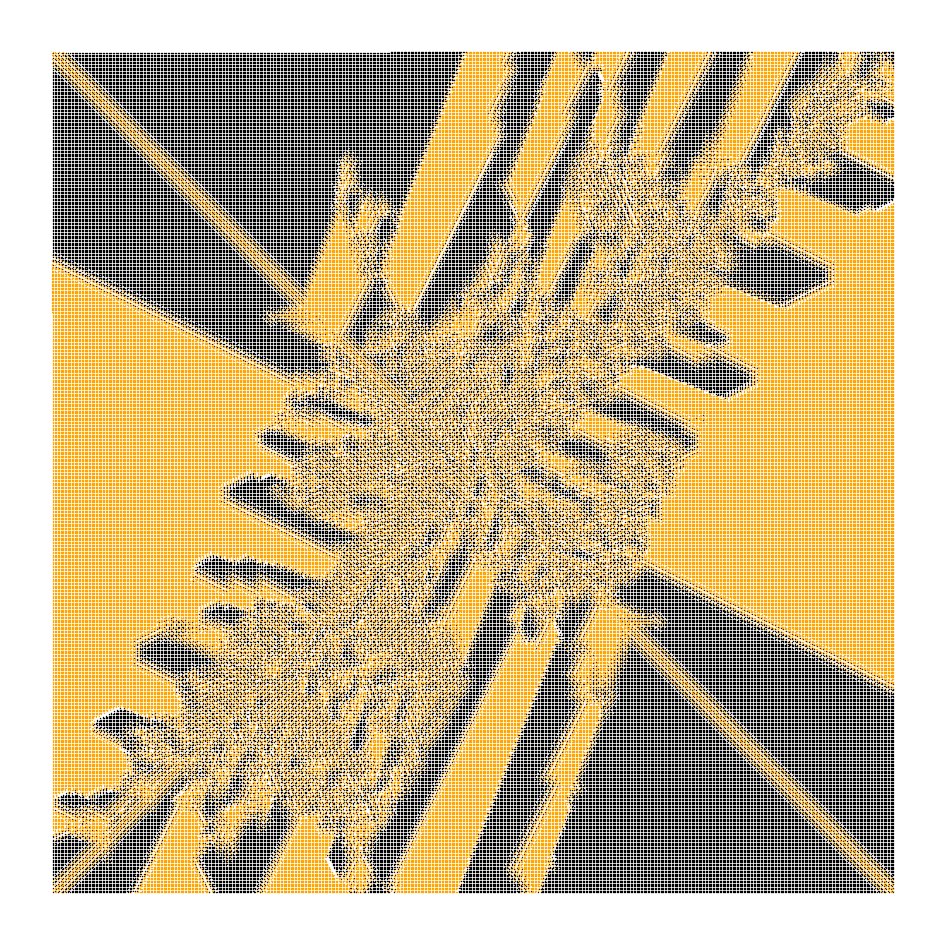
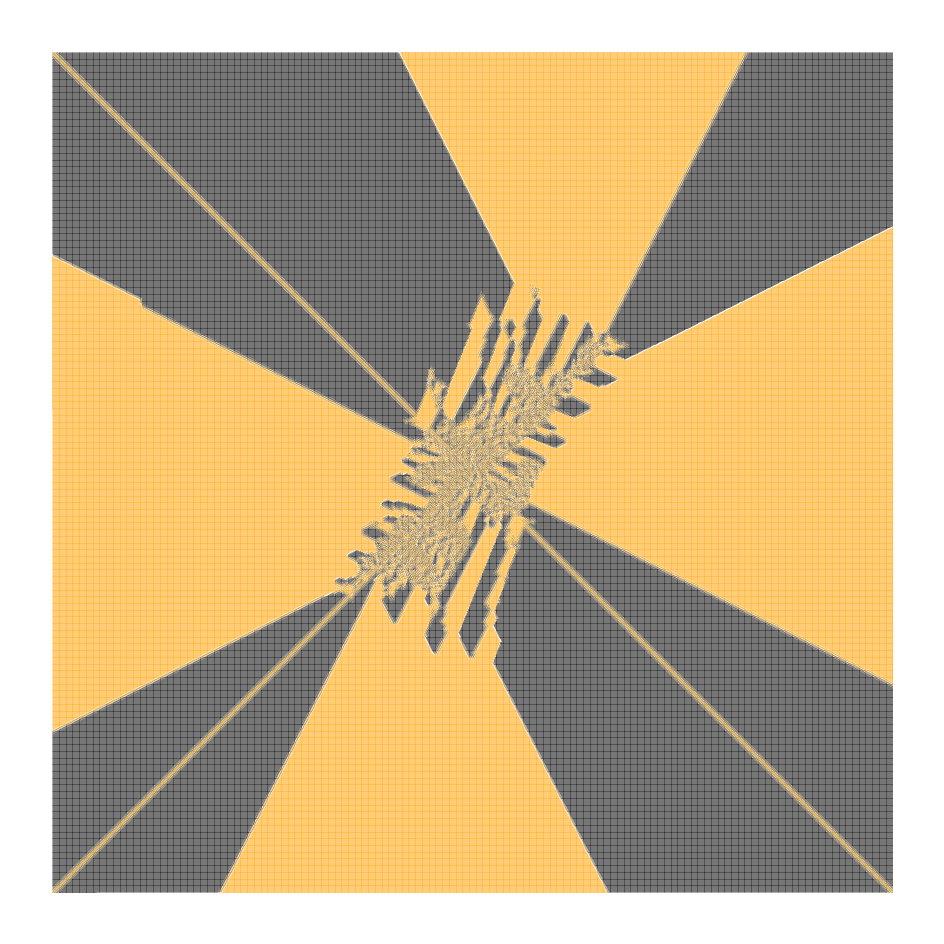
All images below are variants of the system described in A392177. A number of players take turns placing their chess pieces on an infinite board, following a square spiral and preferring the lowest index along the spiral. No piece must be threatened by a piece belonging to another player. Players are encoded by colors.
The players may or may not use the same kind of piece. If they do not, it matters who plays first. Below, players and their pieces are listed in order. If all players use the same kind of piece, then the threat relation is symmetric. If not, the player whose turn it is only checks that his own piece is not threatened.
The more standard non-standard pieces have well-established names: fers, vazir, alfil. At some point I stopped bothering and assigned my own names, as follows:
| Knight | (2, 1) |
| Fers | (1, 1) |
| Vazir | (1, 0) |
| Camel | (3, 1) |
| Zebra | (3, 2) |
| Antelope | (4, 3) |
| Eland | (5, 3) |
| Satrap | (2, 0) |
| Aspbad | (2, 2) |
| Spehbed | (3, 0) |
| Marzban | (3, 3) |
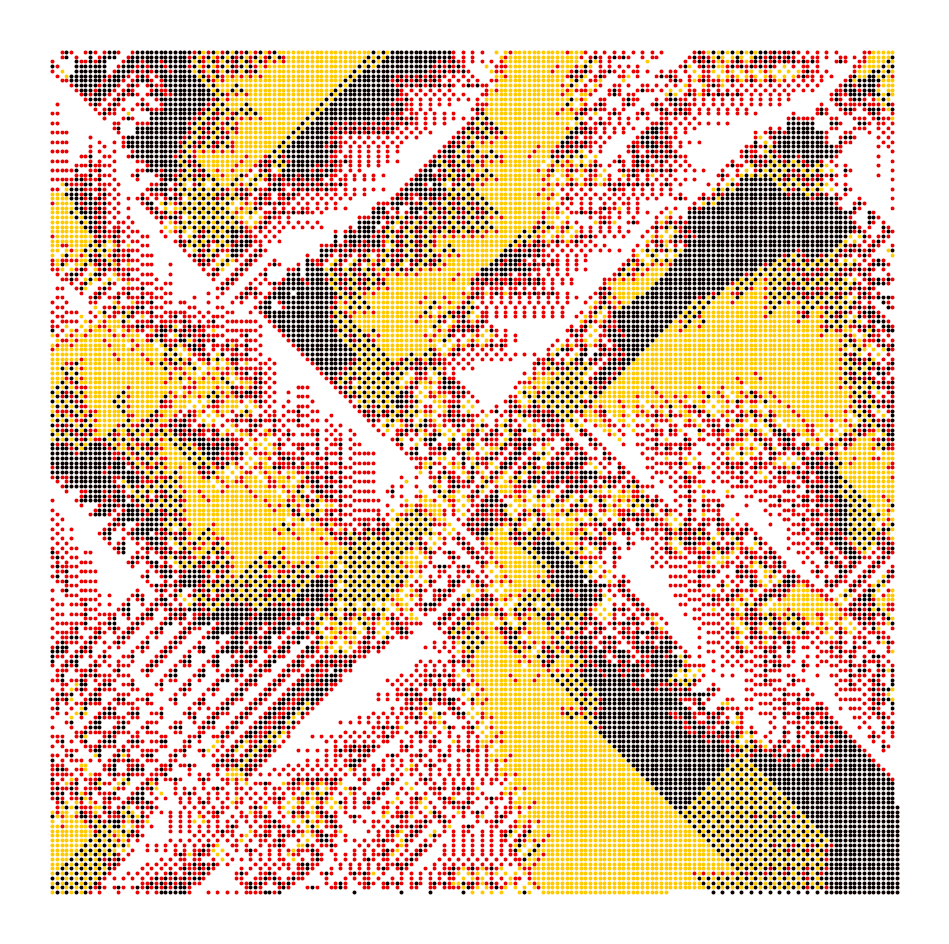
Black aspbad, orange spehbed. They are not out of focus; the blur is caused by how the colors mix.
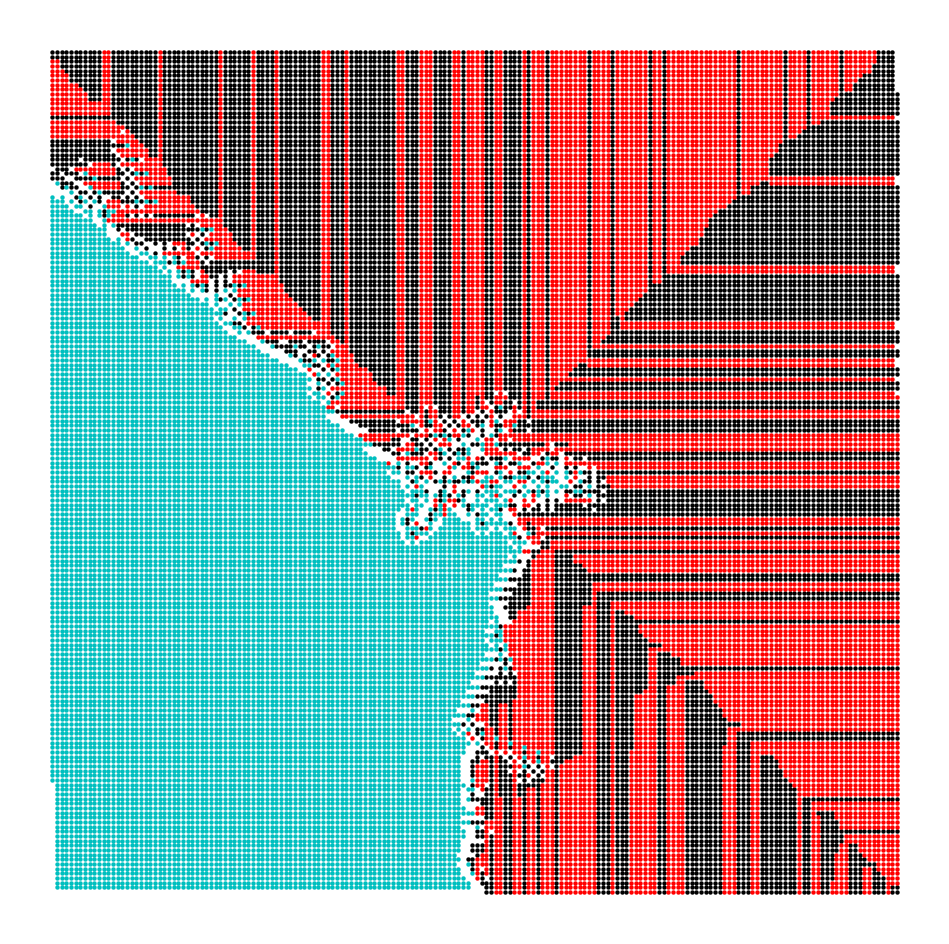
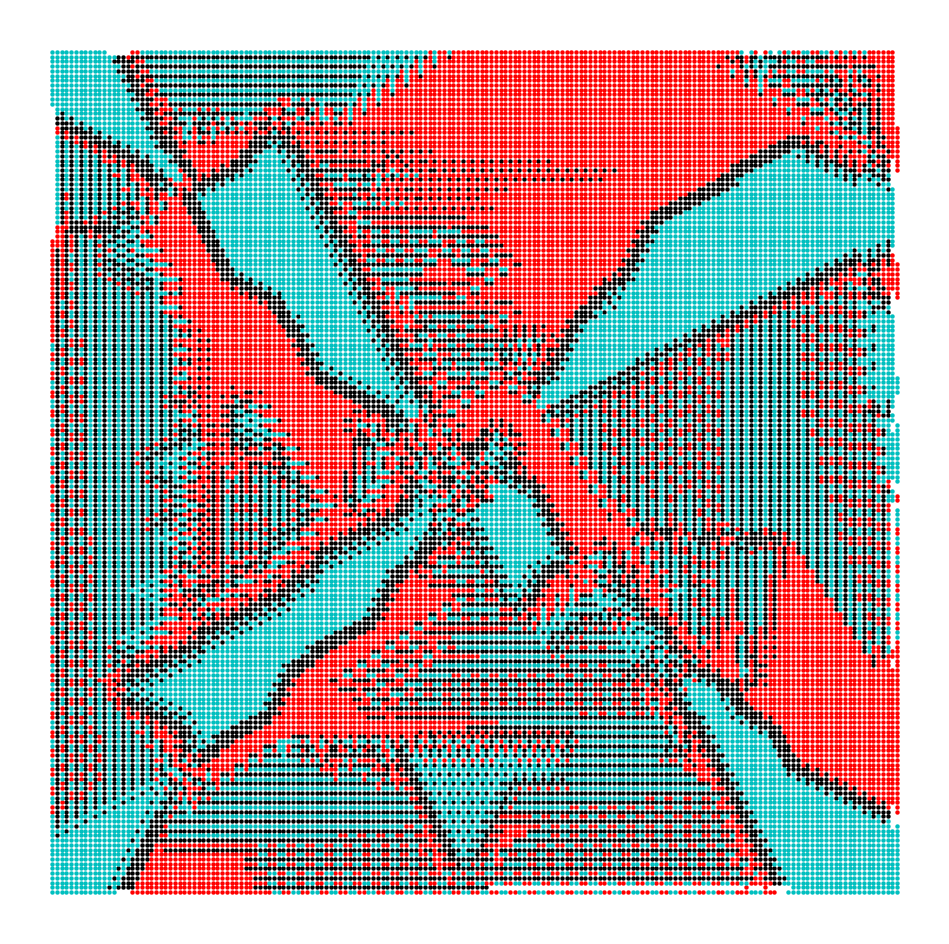
Black knight, cyan antelope.
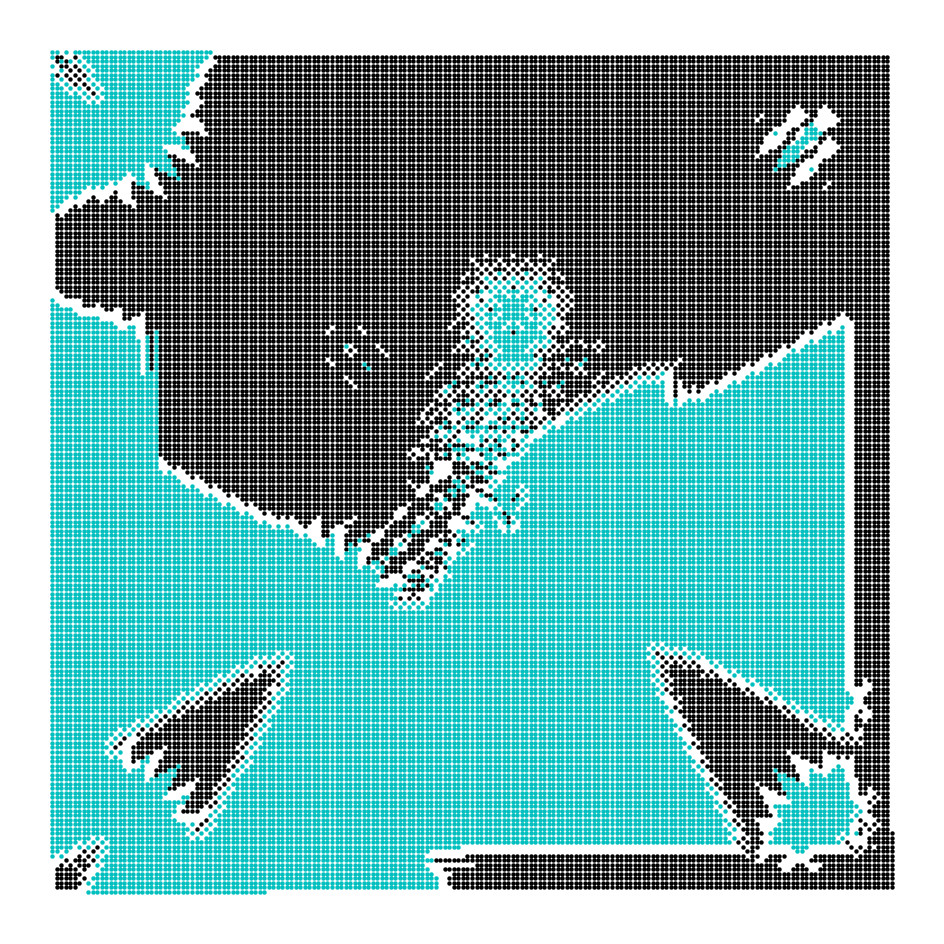
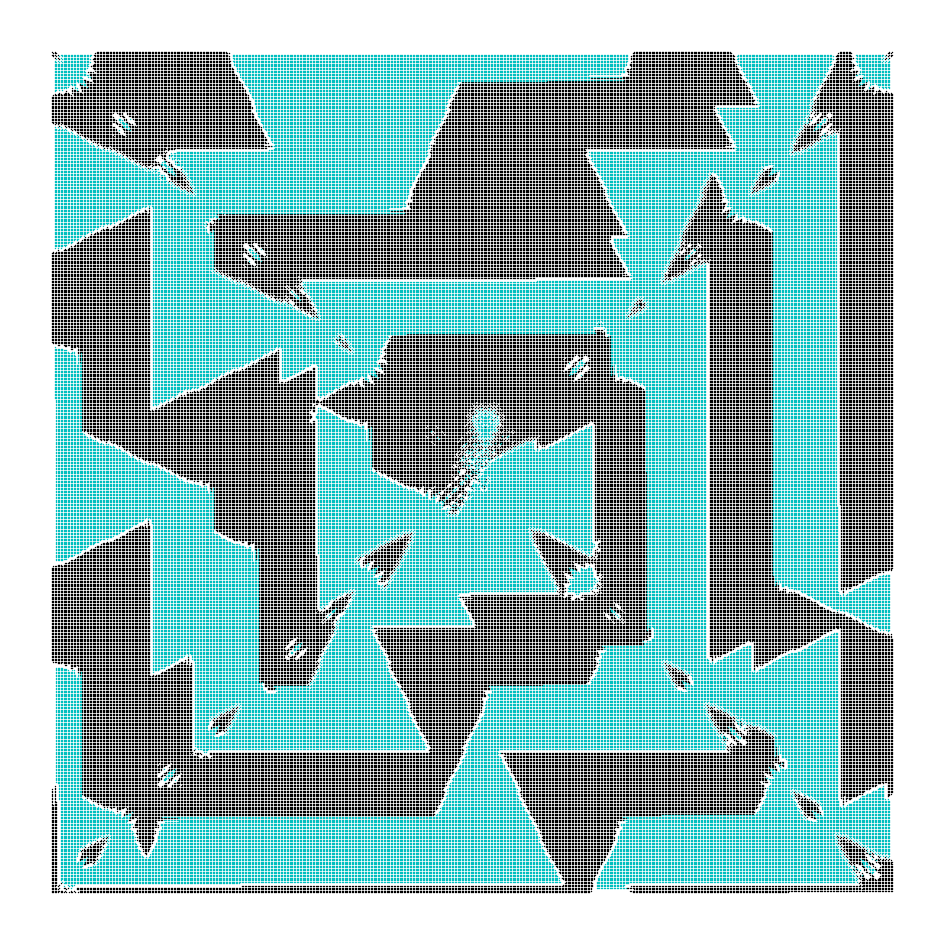
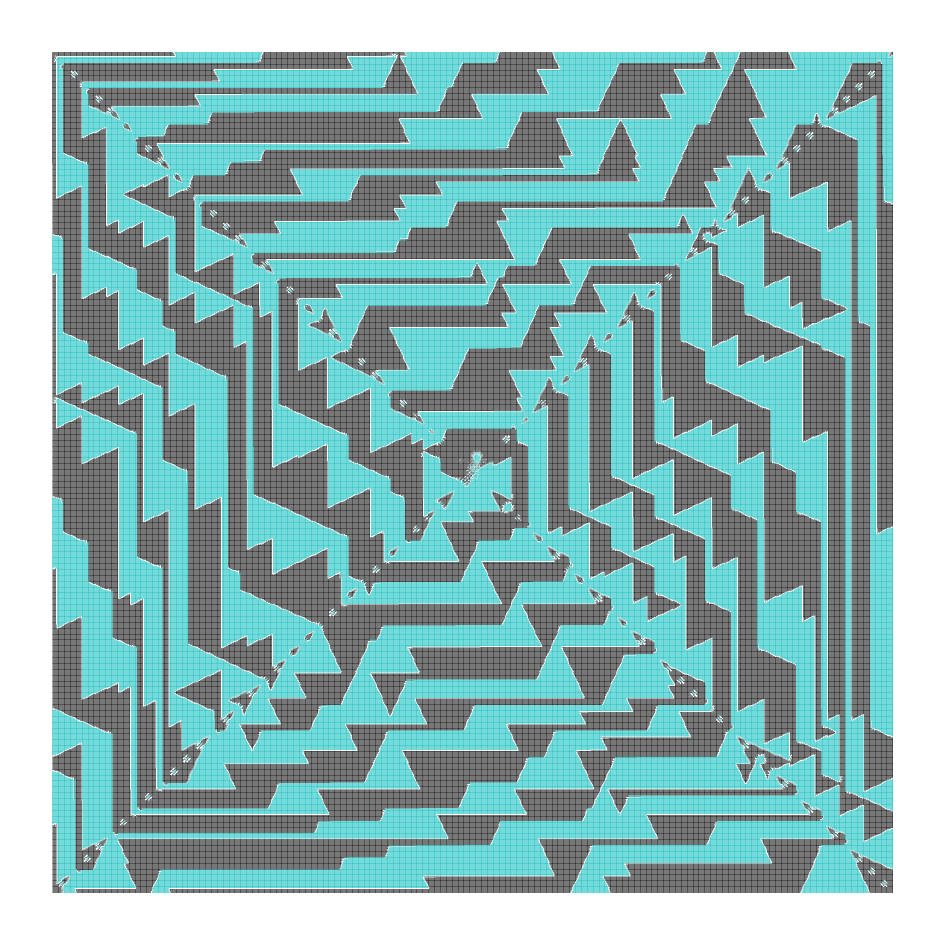
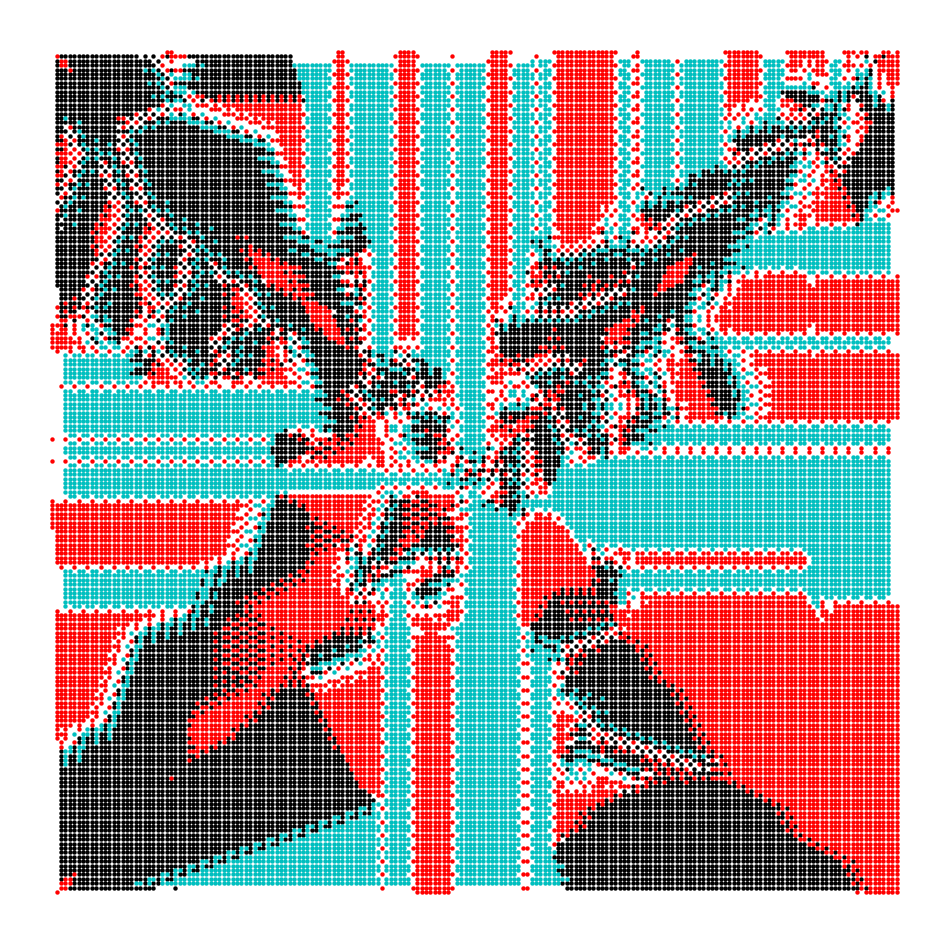
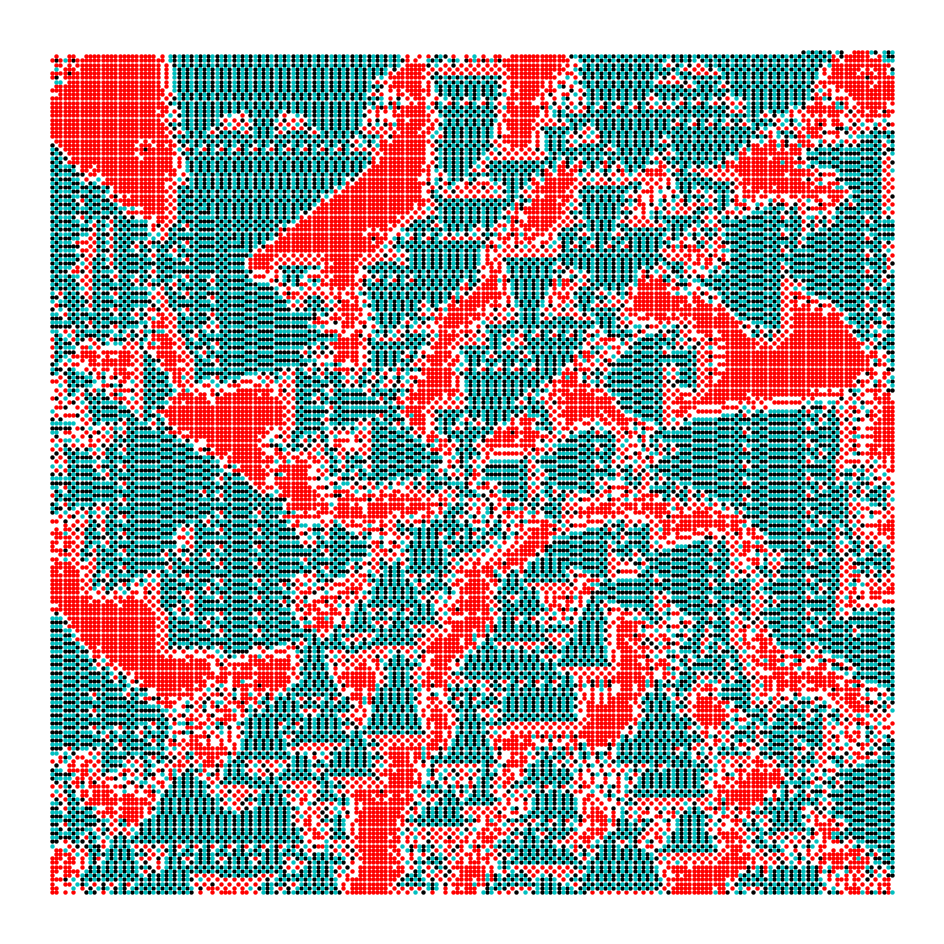
Black aspbad, red vazir, cyan antelope. Aspbad threatens vazir, vazir threatens antelope, antelope threatens vazir.
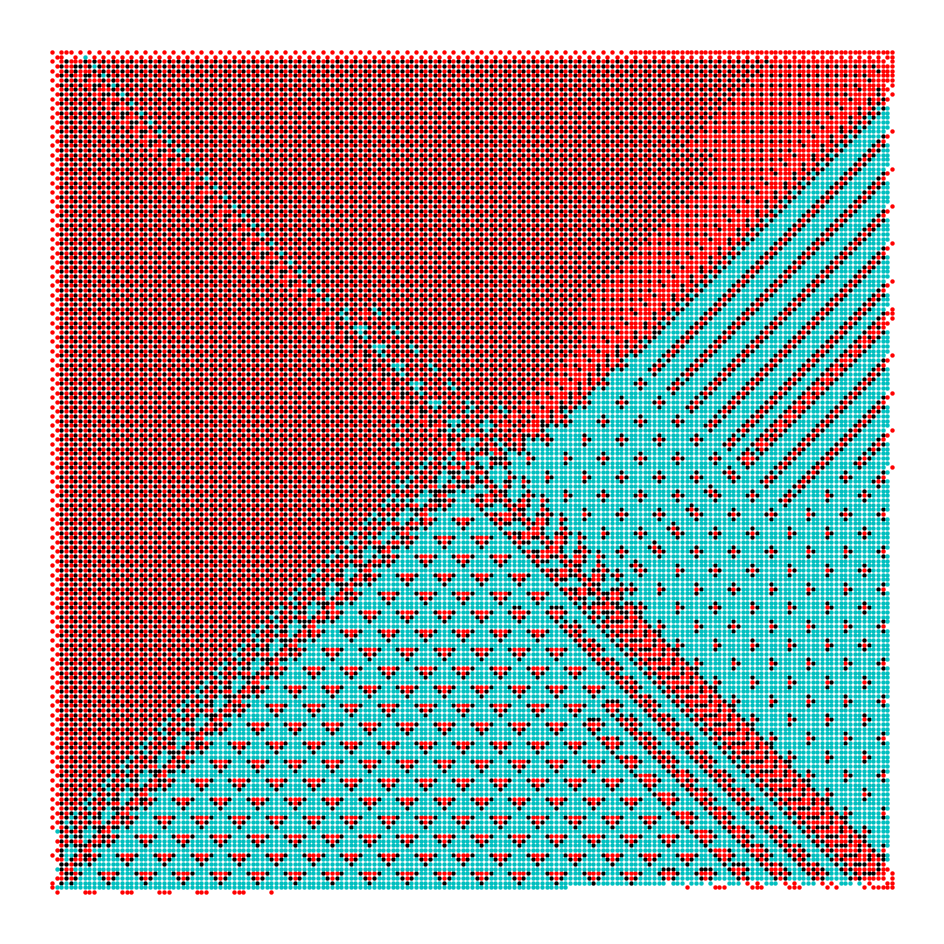
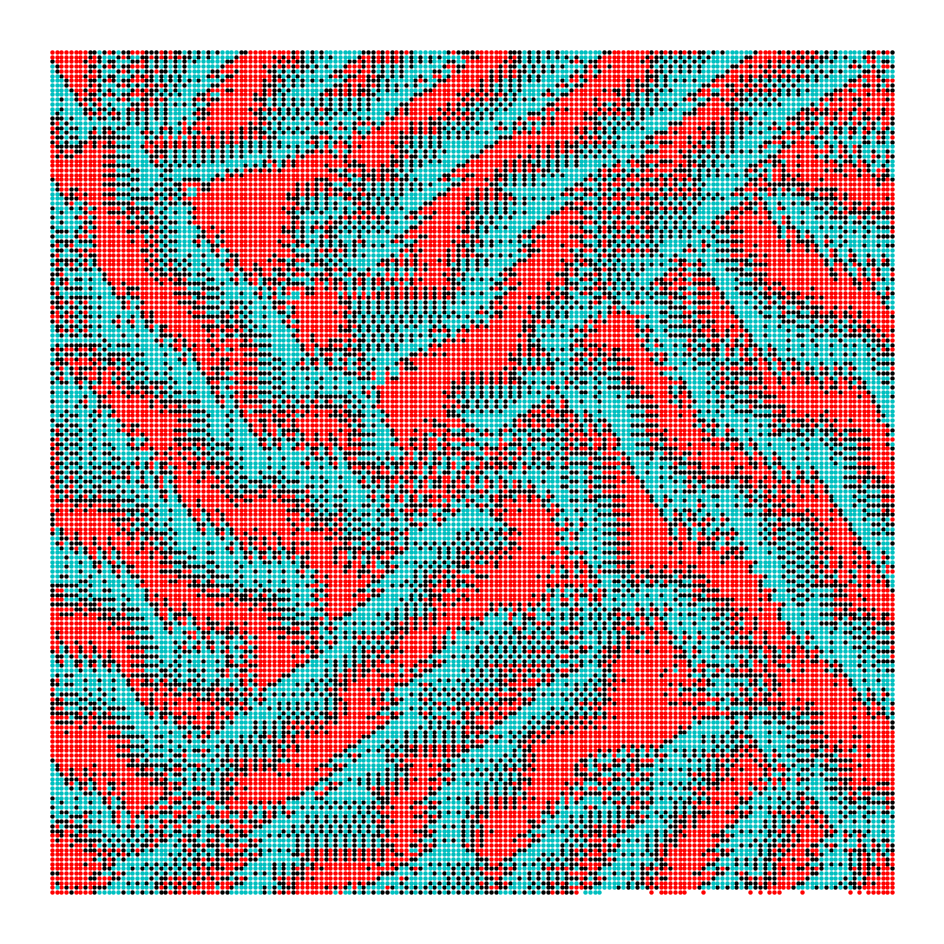
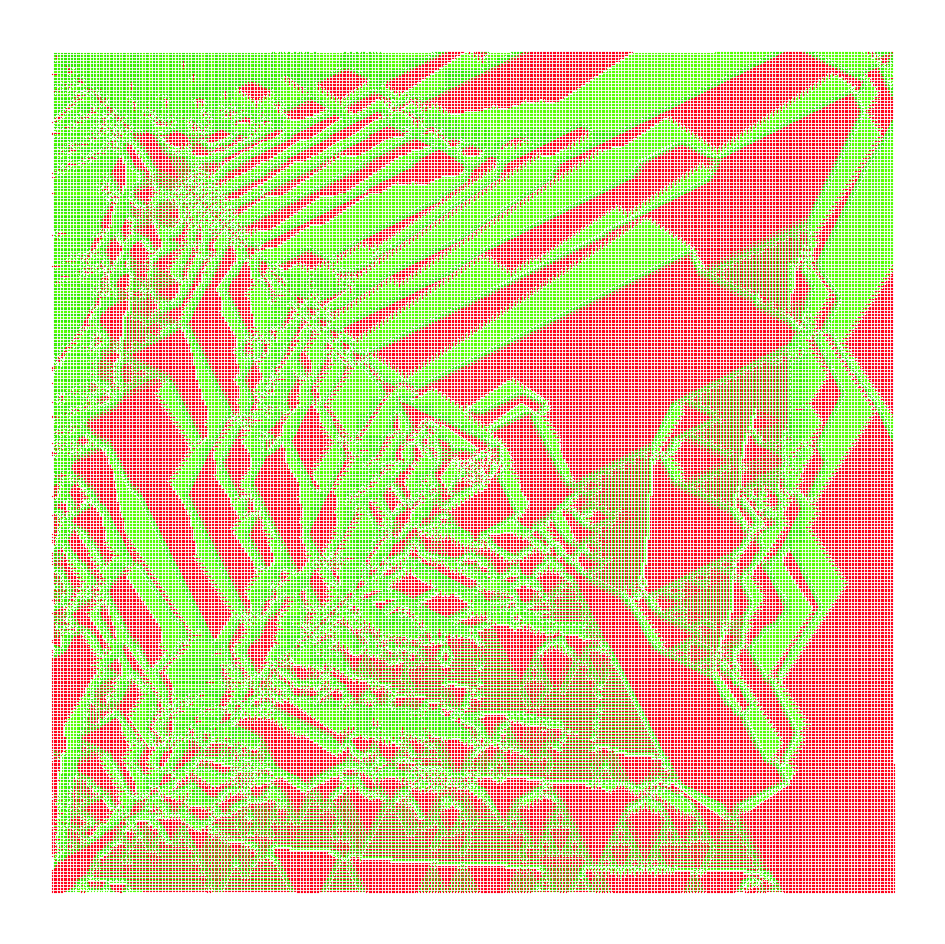
Black knight, red eland, cyan vazir. Knight threatens everyone, eland threatens only vazir, vazir threatens only knight.
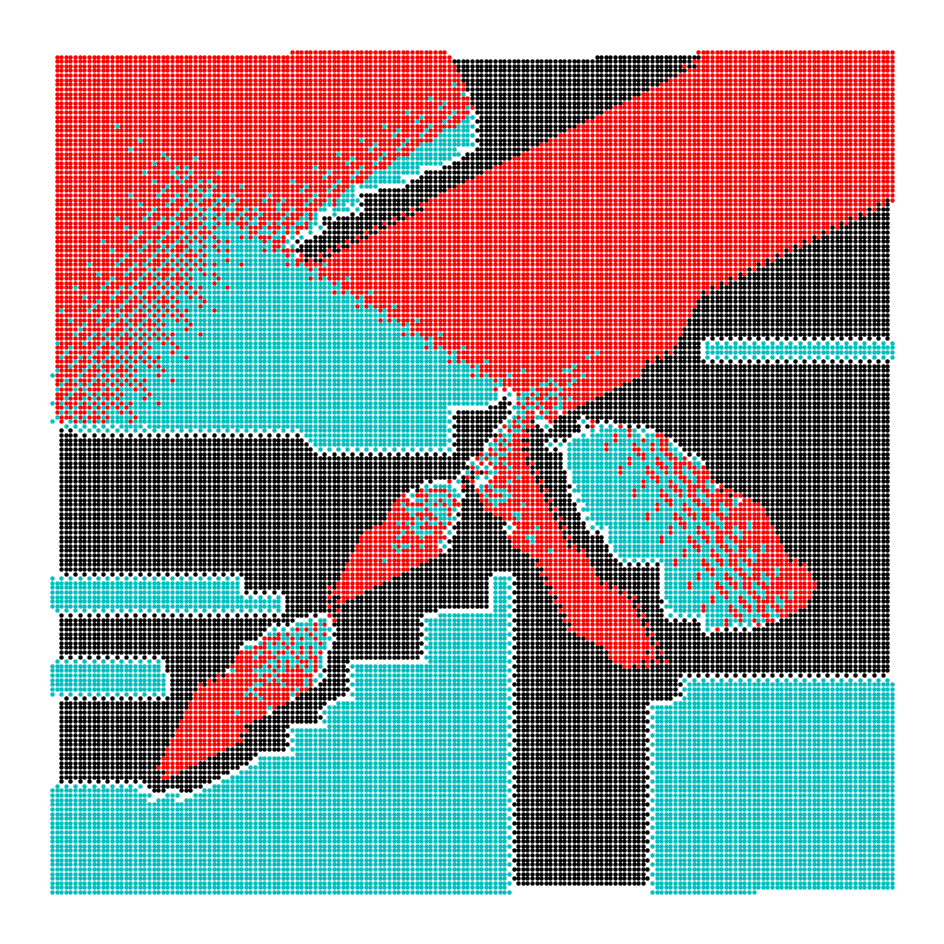
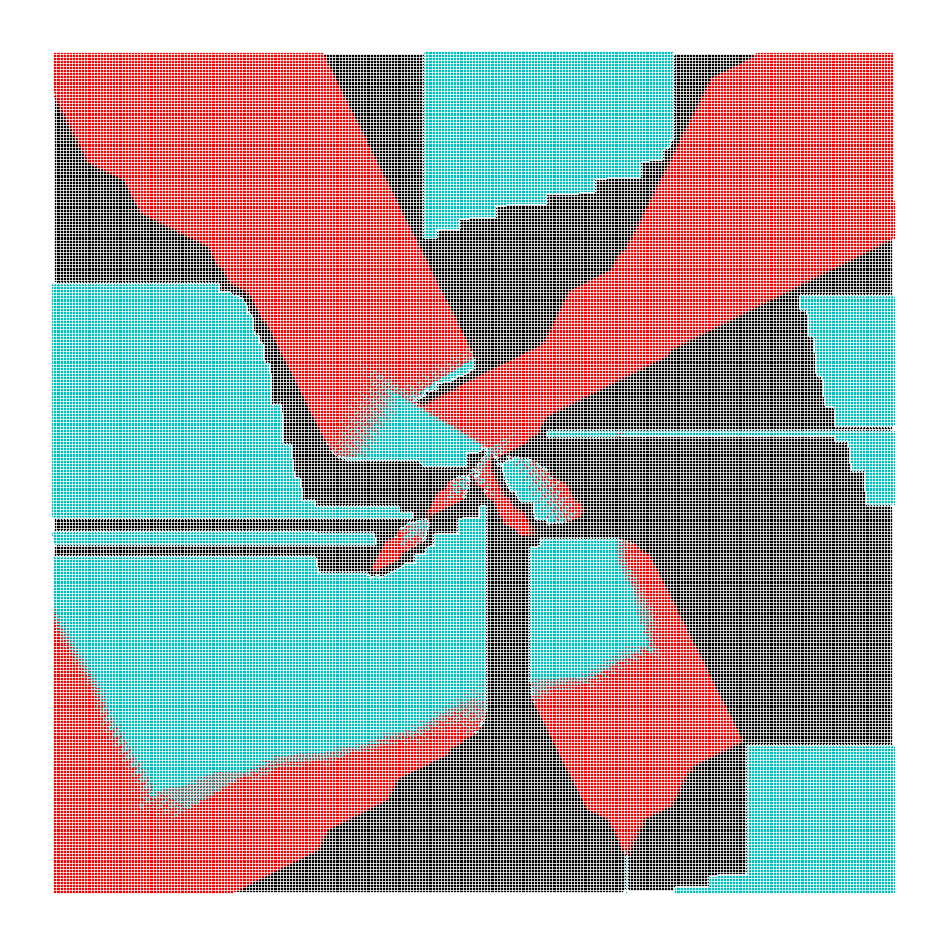
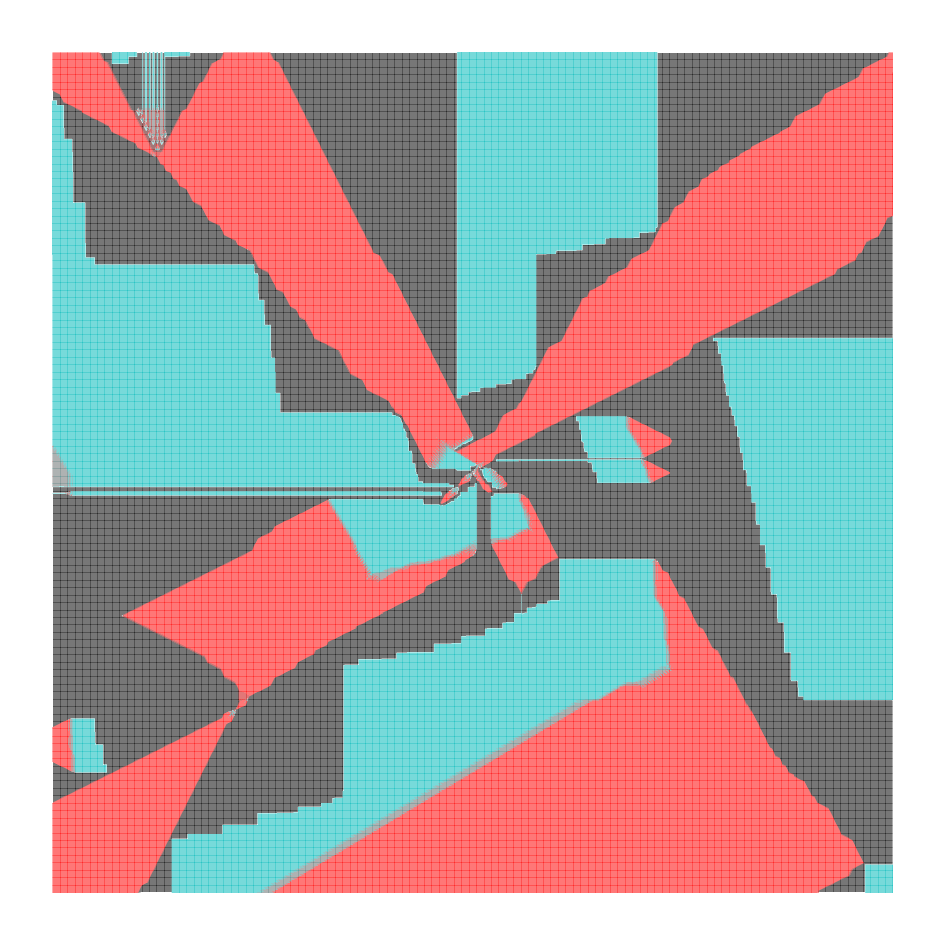
The following images are just fortuitous examples, with pieces, enmities and colors chosen at random.